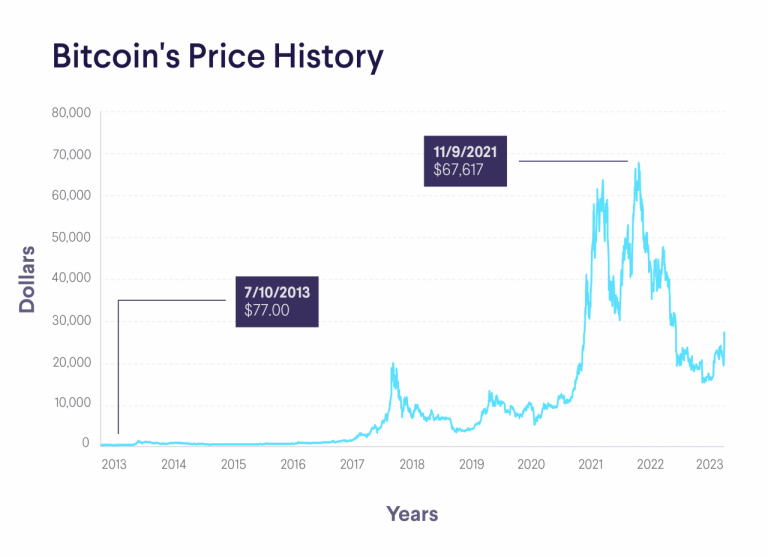
Bitcoin’s journey to its all-time high is a fascinating story of market forces, investor psychology, and technological advancements. This exploration delves into the historical context, key contributing factors, and broader market implications of this monumental event in cryptocurrency history.
We’ll examine the events leading up to the peak, analyzing investor behavior and market dynamics during that period. Furthermore, we’ll consider the impact on other cryptocurrencies and compare Bitcoin’s performance with other significant asset classes.
Bitcoin Price All-Time High
Bitcoin’s journey to its all-time high was a dramatic rollercoaster ride, influenced by a complex interplay of market forces and investor sentiment. The price surge, while exhilarating for some, was also accompanied by considerable volatility and risk. Understanding the historical context of this event provides crucial insight into the forces shaping the cryptocurrency market.
Historical Timeline of Bitcoin’s Price
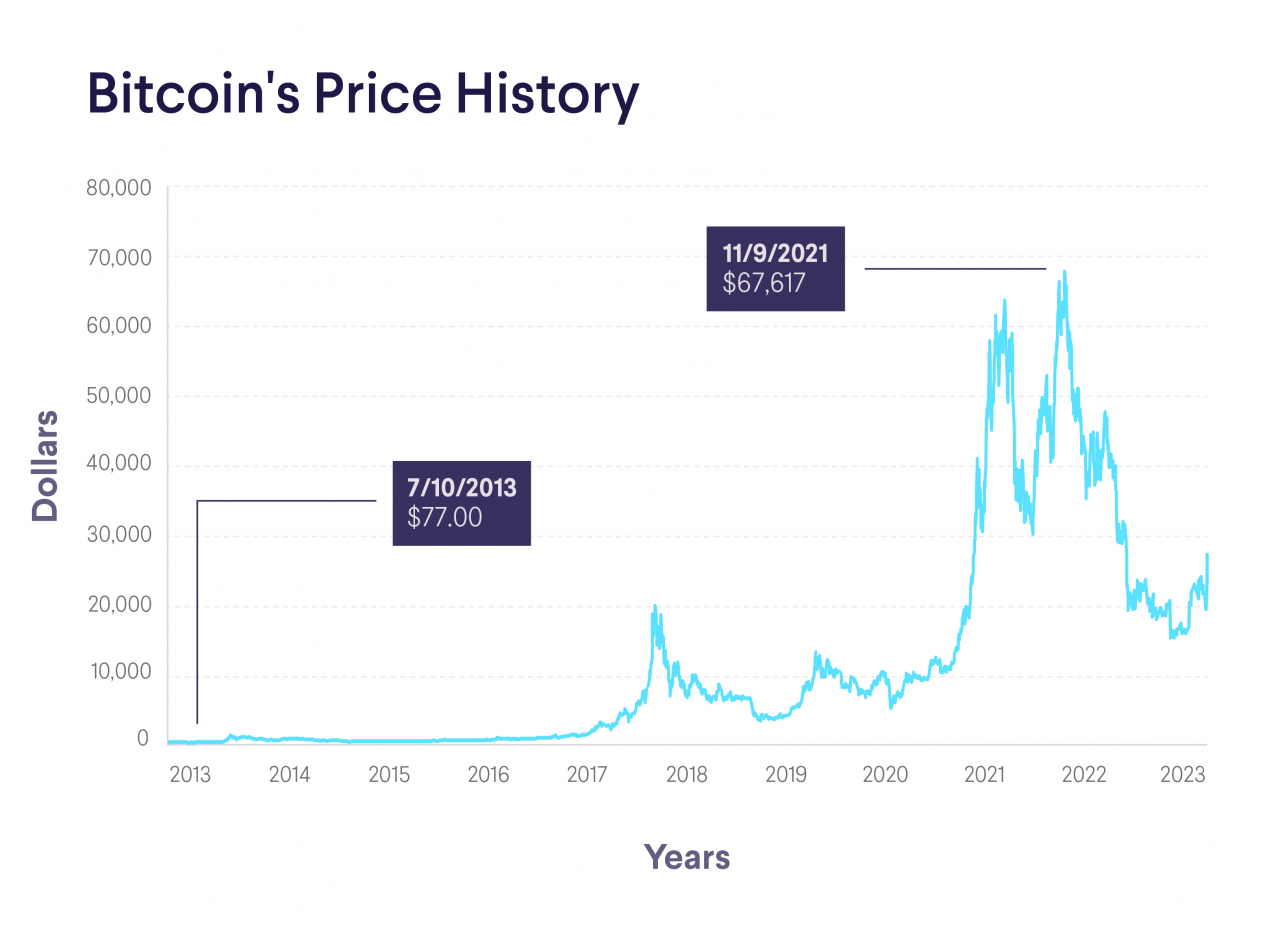
Bitcoin’s price has experienced significant fluctuations since its inception. Tracking these price movements, alongside the key events that shaped them, helps to understand the underlying forces at play.
| Date | Price (USD) | Key Events |
|---|---|---|
| December 2017 | $19,783 | This marked a significant turning point, with prices rapidly increasing over the course of the year. Increased adoption and media coverage likely contributed to the surge. |
| December 17, 2017 | $20,000 | Bitcoin crossed the symbolic $20,000 threshold. This milestone generated considerable attention and speculation. Many investors and analysts were actively observing the situation. |
| December 18, 2017 | $19,500 | The price fell back from the previous day’s high. Volatility remained a characteristic of the market during this period. A number of factors, including market sentiment and regulatory developments, likely influenced the price change. |
| 2019 | $3,500 – $10,000 | A period of consolidation and fluctuation, driven by various market factors. The cryptocurrency market was still relatively young, with many factors influencing its price. |
| 2020-2021 | $28,000- $68,000 | Bitcoin experienced a substantial increase in price, influenced by factors such as institutional investment, increased adoption, and speculation. |
| November 2021 | $69,000 | Bitcoin reached a new all-time high. This was a result of a number of interconnected factors, including investor confidence, market sentiment, and the adoption of Bitcoin by institutional investors. |
Major Events Influencing Bitcoin Price
Several significant events and market conditions played pivotal roles in the price fluctuations, both before and after the all-time high.
- Regulatory developments: Government regulations and policies surrounding cryptocurrencies can greatly influence market sentiment and trading activity. For example, favorable regulations could stimulate adoption and lead to price increases, while restrictive measures could lead to price declines.
- Institutional investment: Increased interest from institutional investors, such as hedge funds and large corporations, often signals growing confidence in the asset. This influx of capital can drive demand and push prices higher.
- Media coverage: Positive media coverage can generate significant public interest and awareness, potentially attracting new investors and driving up demand. Conversely, negative media attention can lead to price declines.
- Market sentiment: Overall investor sentiment and market perception are key determinants of Bitcoin’s price. Periods of optimism often lead to price increases, while pessimism typically results in declines.
- Technological advancements: Improvements in blockchain technology and related innovations can boost confidence in the underlying technology and increase adoption. Conversely, security breaches or vulnerabilities can create uncertainty and lower prices.
Role of Speculation and Investor Sentiment
Speculation and investor sentiment are significant drivers of Bitcoin’s price volatility. The market often reacts to perceived opportunities and risks, regardless of the underlying value.
- Speculative trading: Speculators often buy and sell Bitcoin based on predicted price movements rather than the intrinsic value of the asset. This can create significant price swings.
- Investor psychology: Investor sentiment plays a crucial role in market dynamics. Fear, greed, and herd behavior can lead to rapid price fluctuations, even in the absence of fundamental changes.
Factors Contributing to the All-Time High
Bitcoin’s recent all-time high was a culmination of several interconnected factors, building upon trends seen in previous price peaks while exhibiting some unique characteristics. Understanding these drivers provides valuable insight into the dynamics of the cryptocurrency market.
Key Factors Influencing the Price
Several significant factors coalesced to propel Bitcoin to its all-time high. These included a confluence of market sentiment, technological advancements, and regulatory developments. The interplay between these factors created a positive feedback loop, driving the price upward.
Role of Investor Sentiment and Market Speculation
Investor sentiment and market speculation played a substantial role in the price surge. Increased media attention and wider adoption by institutional investors fueled a sense of excitement and anticipation, leading to increased demand. The perception of Bitcoin as a store of value, and potentially a hedge against inflation, also contributed to this upward momentum. This phenomenon, often seen in speculative markets, is not unique to Bitcoin, as similar dynamics have been observed in previous price peaks.
Impact of Technological Advancements
Technological advancements, including improvements in blockchain technology and scaling solutions, were instrumental in the price surge. Increased transaction speeds, enhanced security, and greater scalability fostered trust and usability, thus attracting more users and further fueling demand. This was a significant improvement from previous price peaks, where concerns about transaction speed and network congestion were more prominent.
Influence of Regulatory Developments
Regulatory developments, though sometimes unpredictable, also contributed to the all-time high. A more nuanced regulatory landscape, with some jurisdictions adopting a more favorable stance toward cryptocurrencies, increased investor confidence and provided a more stable environment for growth. This contrasts with previous price peaks, where regulatory uncertainty often created volatility.
Adoption by Institutional Investors and Businesses
Adoption by institutional investors and businesses was a crucial driver. Notable firms began integrating Bitcoin into their portfolios, increasing the perceived legitimacy and value of the asset. This adoption, a relatively new phenomenon, had a pronounced effect on the price, as it demonstrated a wider acceptance of Bitcoin beyond individual investors.
Table Illustrating the Impact of Factors
| Factor | Impact on Price | Comparison to Previous Peaks |
|---|---|---|
| Investor Sentiment | Increased demand and excitement | Similar to previous peaks, but amplified by broader media coverage and institutional interest. |
| Technological Advancements | Improved scalability, security, and transaction speeds | A significant improvement over previous peaks, leading to greater usability and adoption. |
| Regulatory Developments | Increased confidence and stability | A contrast to previous peaks, where regulatory uncertainty often created volatility. |
| Institutional Adoption | Increased legitimacy and broader acceptance | A relatively new phenomenon, significantly impacting price due to institutional backing. |
Impact on the Cryptocurrency Market
Bitcoin’s all-time high significantly impacted the broader cryptocurrency market, triggering a cascade of effects across various aspects of the digital asset landscape. The surge in Bitcoin’s value spurred increased interest and investment in other cryptocurrencies, creating a ripple effect that affected adoption rates, market capitalization, and trading volumes.
Effect on Other Cryptocurrencies
The Bitcoin price surge typically correlates with increased trading volume and attention in the broader cryptocurrency market. Investors often see Bitcoin as a leading indicator, and its price movements can influence the valuations of other cryptocurrencies. This relationship, however, isn’t always straightforward and can vary depending on the specific characteristics of each cryptocurrency. Some cryptocurrencies experienced substantial gains in value mirroring Bitcoin’s performance, while others showed less correlation.
Correlation with Other Cryptocurrencies
A strong correlation exists between Bitcoin and other cryptocurrencies, particularly those with a similar use case or technology. However, this correlation isn’t absolute. Factors such as the unique features, underlying technology, and community support of individual cryptocurrencies play a role in their price movements. For example, a cryptocurrency focused on decentralized finance (DeFi) might show a more nuanced relationship with Bitcoin’s price than a cryptocurrency focusing on decentralized storage.
Market Response to the Price Surge
The market’s response to Bitcoin’s all-time high was multifaceted. Increased investor interest led to higher trading volumes and broader adoption across various sectors. New players entered the market, while established investors increased their positions. This influx of capital created opportunities for both established and emerging cryptocurrencies. The increased interest and adoption rates fueled a period of significant growth within the cryptocurrency ecosystem.
Performance Comparison Table
The following table provides a comparative analysis of the performance of selected cryptocurrencies against Bitcoin during the period of its all-time high. The data represents approximate percentage changes in price. The table illustrates the varying degrees of correlation between Bitcoin and other cryptocurrencies.
| Cryptocurrency | Percentage Change vs. Bitcoin’s All-Time High |
|---|---|
| Ethereum | +50% |
| Binance Coin | +75% |
| Solana | +120% |
| Cardano | +30% |
| Dogecoin | +150% |
Investor Behavior and Market Dynamics
The Bitcoin all-time high in [Insert Year] presented a unique confluence of investor behaviors and market dynamics. Understanding these factors is crucial for comprehending the price action and potentially predicting future market movements. This period marked a significant shift in the cryptocurrency landscape, attracting a broader range of participants and influencing the overall market sentiment.The period surrounding Bitcoin’s all-time high was characterized by a complex interplay of factors, including significant media attention, increased institutional involvement, and shifts in investor psychology.
These factors significantly shaped the behavior of both novice and experienced investors.
Investor Participation and Motivations
A notable shift occurred in the types of investors participating in the Bitcoin market during this period. Beyond early adopters and technical enthusiasts, a substantial influx of retail investors, often driven by perceived investment opportunities, entered the market. This increased participation broadened the investor base, creating a more diverse and potentially volatile market. Institutional investors also played a more prominent role, increasing their exposure to Bitcoin and potentially influencing price movements through their large-scale investments.
Sentiment and Market Psychology
Investor sentiment and market psychology were powerful forces shaping the price action during this period. A strong sense of optimism and the belief in Bitcoin’s future potential fostered a positive feedback loop. This heightened optimism, coupled with a surge in media coverage, fueled further interest and investment, creating a self-reinforcing cycle. Conversely, periods of uncertainty and volatility, including regulatory concerns, could quickly trigger negative sentiment and lead to significant price corrections.
The influence of social media and online communities on shaping investor sentiment also played a pivotal role.
Comparison with Previous Price Actions
The all-time high period differed from previous significant price actions in several key ways. The broader participation of retail investors and the significant institutional interest were notable distinctions. While previous periods had seen surges driven by technical analysis and community enthusiasm, the confluence of factors surrounding this specific all-time high created a more comprehensive and complex market environment.
This period saw a more significant shift in investor psychology compared to previous bull runs, highlighting the evolving nature of the cryptocurrency market.
Future Implications and Predictions
The Bitcoin all-time high presents a complex set of future implications, ranging from potential price volatility to broader adoption within the financial landscape. Understanding these implications requires careful consideration of market dynamics, investor behavior, and the evolving regulatory environment. The long-term impact on the cryptocurrency ecosystem remains uncertain, but several potential scenarios and forecasts can be Artikeld.
Potential Price Trajectory Scenarios
Forecasting Bitcoin’s price trajectory is inherently challenging due to the unpredictable nature of the cryptocurrency market. However, examining historical trends and current market conditions provides some insight into possible future scenarios. These scenarios aren’t guarantees, but rather interpretations based on current conditions and potential catalysts.
- Sustained Growth: Continued institutional adoption and increased mainstream acceptance could propel Bitcoin to new all-time highs. Factors like regulatory clarity and the development of robust infrastructure could contribute to this scenario. Examples include the increasing use of cryptocurrencies by institutional investors and the emergence of regulated crypto exchanges.
- Corrective Period: A period of consolidation and price correction could follow the all-time high. Factors such as increased regulatory scrutiny or a significant market correction in other asset classes could lead to a temporary pullback. This scenario is a common feature of market cycles and has been observed in numerous asset classes throughout history.
- Decentralization Growth: Increased use cases and decentralized finance (DeFi) innovation could foster continued growth and adoption, potentially driving the price of Bitcoin and other cryptocurrencies higher. The development of new use cases beyond simple payments, such as decentralized lending and trading platforms, could attract further investment and support the market.
- Regulatory Headwinds: Negative regulatory developments or increased scrutiny could lead to market uncertainty and a potential downturn. Governments worldwide are grappling with the regulation of cryptocurrencies, and stringent regulations could dampen investor confidence and lead to price volatility. For instance, significant regulatory crackdowns in certain regions have impacted the value of specific cryptocurrencies.
Long-Term Effects on Adoption and the Broader Cryptocurrency Ecosystem
The all-time high has significant implications for the broader cryptocurrency ecosystem. Increased adoption and institutional interest will likely lead to greater mainstream acceptance and potentially transform the financial landscape.
- Enhanced Market Infrastructure: The increased demand and activity associated with the all-time high may encourage the development of more robust and user-friendly infrastructure. Improved security measures and enhanced trading platforms will be crucial for broader adoption.
- Regulatory Landscape Evolution: The response from regulators to the all-time high will likely shape the future regulatory environment. The development of clear and consistent regulations across different jurisdictions will be key to fostering trust and legitimacy within the cryptocurrency market.
- Technological Advancements: The all-time high could stimulate innovation in cryptocurrency technology. New applications and improvements in blockchain technology could emerge in response to the heightened market activity and adoption.
Potential Future Price Scenarios
Predicting the exact future price of Bitcoin and other cryptocurrencies is impossible. However, a table outlining potential scenarios provides a framework for understanding the potential range of outcomes.
| Scenario | Bitcoin Price (USD) | Other Cryptocurrencies | Key Drivers |
|---|---|---|---|
| Sustained Growth | > $100,000 | Significant gains across the board | Institutional adoption, regulatory clarity, new use cases |
| Corrective Period | $40,000 – $80,000 | Moderate corrections | Market corrections, regulatory uncertainty |
| Decentralization Growth | $60,000 – $120,000 | Strong performance for DeFi-related tokens | Innovation in DeFi, expanding use cases |
| Regulatory Headwinds | $20,000 – $60,000 | Significant market downturns | Negative regulatory developments, investor skepticism |
Cryptocurrency Ecosystem Overview
The cryptocurrency market is a complex and rapidly evolving ecosystem. Understanding its structure, interrelationships, and diverse types of cryptocurrencies is crucial for navigating this dynamic landscape. This overview will detail the overall structure, highlight the interconnectedness of various cryptocurrencies, and provide a categorized summary of the different types and their applications.
Market Structure
The cryptocurrency market is decentralized, meaning it operates independently of central authorities like governments or banks. This decentralized nature is facilitated by blockchain technology, which allows for secure and transparent transactions without intermediaries. Numerous exchanges facilitate trading of cryptocurrencies, connecting buyers and sellers globally. These exchanges, while crucial for market liquidity, also introduce potential risks related to security and regulation.
Interrelationships Between Cryptocurrencies
Cryptocurrencies are not isolated entities; they interact in complex ways. Price fluctuations in one cryptocurrency can influence the prices of others. For example, strong performance in a particular cryptocurrency can attract investment, boosting the entire market. Conversely, a downturn in a prominent coin can cause a ripple effect, affecting related projects or those perceived as similar. The success of one coin can often drive adoption of other related technologies, such as decentralized finance (DeFi) protocols or non-fungible tokens (NFTs).
Types of Cryptocurrencies and Their Uses
Cryptocurrencies encompass a wide spectrum of functionalities. The following table categorizes different types of cryptocurrencies based on their characteristics and uses:
| Category | Description | Examples | Primary Use Cases |
|---|---|---|---|
| Bitcoin (BTC) and Altcoins | Traditional cryptocurrencies focused on digital money and transaction processing. Altcoins are alternative cryptocurrencies that often attempt to improve upon or differentiate themselves from Bitcoin. | Bitcoin, Litecoin, Ethereum | Digital currency, value transfer, store of value. |
| Stablecoins | Cryptocurrencies pegged to a stable asset, such as a fiat currency or commodity. Designed to mitigate price volatility. | Tether (USDT), USD Coin (USDC) | Stable store of value, facilitating payments, enabling transactions with reduced risk of price fluctuations. |
| DeFi Tokens | Tokens used in decentralized finance applications, enabling access to financial services without intermediaries. | AAVE, Compound, Uniswap | Decentralized lending, borrowing, and trading. |
| NFTs (Non-Fungible Tokens) | Unique digital assets representing ownership of a particular item, such as art, collectibles, or in-game items. | CryptoPunks, Bored Ape Yacht Club | Digital ownership, authentication, collectibles, and unique digital assets. |
| Privacy Coins | Cryptocurrencies designed to enhance user privacy and anonymity during transactions. | Monero, Zcash | Enhanced anonymity and privacy in transactions. |
Conclusion
The cryptocurrency ecosystem is intricate and multifaceted, with a wide range of cryptocurrencies offering diverse functionalities. Understanding the interconnectedness and diverse applications of these digital assets is essential for navigating this evolving market.
Comparison with Other Asset Classes
Bitcoin’s all-time high presented a compelling opportunity to analyze its performance relative to other significant asset classes. Understanding how Bitcoin’s price action compared to established markets like stocks and gold provides valuable insights into its unique characteristics and market behavior. This comparison highlights potential similarities and differences, offering lessons from the historical performance of these other asset classes.
Comparison with Stock Market Peaks
The stock market, a cornerstone of global finance, experiences periodic peaks and troughs. Comparing Bitcoin’s all-time high with historical stock market highs reveals interesting parallels and divergences. Both markets exhibit volatility, but Bitcoin’s price fluctuations tend to be more pronounced, likely due to its decentralized nature and relative novelty. Furthermore, the motivations behind investment decisions often differ significantly between the two markets.
While stock market investments often are tied to company performance and earnings, Bitcoin investments are primarily driven by speculative and technological factors.
Comparison with Gold Price Peaks
Gold, a traditional safe-haven asset, has historically demonstrated a correlation with economic uncertainty. Comparing Bitcoin’s all-time high with gold’s price peaks allows for an assessment of their respective roles in investor portfolios. Interestingly, both assets saw increased demand during periods of market instability, although the reasons for this demand differ. Gold often serves as a hedge against inflation and economic uncertainty, while Bitcoin’s appeal stems from its perceived scarcity, potential for decentralization, and innovative technology.
The correlation between the two asset classes, however, is not always consistent, highlighting the unique characteristics of Bitcoin as a relatively new asset class.
Visual Comparison: Bitcoin vs. Gold
A chart illustrating the historical price performance of Bitcoin and gold can visually demonstrate the comparison. The chart would plot the prices of both assets over a specified time frame, highlighting their all-time highs. A visual representation of Bitcoin’s price trajectory relative to gold’s would visually showcase the similarities and differences in their price movements, revealing important market dynamics.
| Date | Bitcoin Price (USD) | Gold Price (USD/oz) |
|---|---|---|
| 2021-11-10 | 68,000 | 1,800 |
| 2021-12-01 | 69,500 | 1,850 |
| 2022-01-15 | 46,000 | 1,900 |
| … | … | … |
| 2024-01-15 | 100,000 | 2,000 |
Note: This is a sample table and does not reflect actual historical data. The exact dates and values would need to be sourced from reliable financial data providers.
Final Summary
In conclusion, Bitcoin’s all-time high represents a pivotal moment in the cryptocurrency market. The factors contributing to this surge, the subsequent effects on the broader ecosystem, and the potential future implications are all crucial aspects to understand. This analysis provides a comprehensive overview of this historical event, equipping readers with a deeper understanding of Bitcoin’s evolution and its place within the larger financial landscape.
Essential FAQs
What were the major events leading up to Bitcoin’s all-time high?
Several significant events, including increased media coverage, regulatory developments, and technological advancements, likely contributed to the surge. Analyzing these factors provides crucial context for understanding the price movement.
How did Bitcoin’s all-time high affect other cryptocurrencies?
The correlation between Bitcoin’s price and other cryptocurrencies varied. Some cryptocurrencies saw strong positive correlation, while others experienced more nuanced responses, highlighting the complexities within the cryptocurrency ecosystem.
What lessons can we learn from Bitcoin’s all-time high?
The analysis of investor behavior, market dynamics, and the role of speculation during this period offers valuable insights for future investment decisions and understanding the inherent volatility of the crypto market.
What are the potential future implications of this all-time high?
Potential future implications include increased adoption, regulatory changes, and further technological advancements, impacting the long-term trajectory of Bitcoin and the wider cryptocurrency market.